Facial Sculpting NYC: How to Choose a Studio
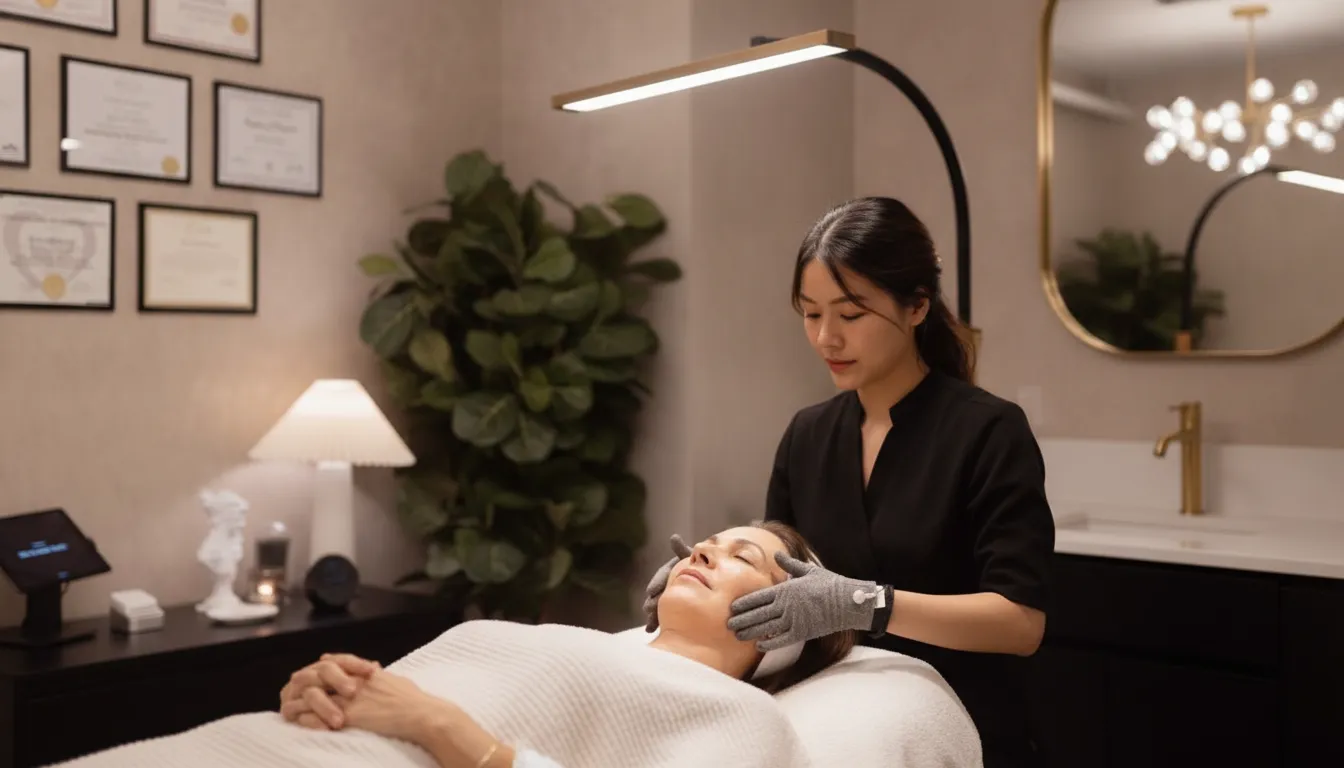
Choosing among facial sculpting NYC studios is about more than finding the closest appointment. You want a setting that understands your concerns, respects the features you want to preserve, and explains what its approach is designed to support. A clear assessment should come before a confident recommendation.
Explore the AgeSculpt Non-Surgical Facelift to learn how a non-invasive, sculpting-led approach may fit your goals.
For many New York City clients, the goal is a natural-looking change. They may want a more defined jawline, less visible puffiness, support for facial firmness, or a refreshed appearance without needles or surgery. This guide explains how to compare studios, treatments, and expectations before you decide where to go.
What Makes a Facial Sculpting Studio Worth Considering?
A strong studio should make it easy to understand three things: how it evaluates you, what the treatment involves, and how it describes possible results. Those answers matter more than a long service menu or a dramatic claim.
Look for private, one-on-one attention
Privacy can change the quality of the conversation. In a private setting, you can describe the changes you have noticed and explain what you want to maintain. You can also ask about sensations, timing, technology, and realistic expectations without feeling rushed.
One-on-one care gives the practitioner time to observe your features carefully. It also creates room to discuss whether your priority is contour, firmness, skin renewal, puffiness, or a combination of concerns. A boutique experience is not automatically better, but focused attention can be valuable when the plan is meant to be personal.
Ask how the studio assesses facial structure
Facial sculpting should not be treated as a fixed routine. Skin texture, firmness, facial contours, and visible fullness vary from person to person. A useful assessment considers your skin and facial structure before the provider chooses areas of focus.
Ask what the assessment includes. Ask how your goals influence the plan. Ask how the studio decides whether to focus on the jawline, lower face, cheeks, submental area, or overall skin appearance. A clear answer shows that the provider is thinking about your features rather than applying the same sequence to everyone.
Pay attention to the language used
Responsible studios use appearance-focused language. They may discuss supporting a more lifted, contoured, balanced, or refreshed look. They should also explain that experiences vary and that any visible change is treatment-dependent.
Be cautious of guaranteed lifts, identical promises for every client, or claims that a non-invasive service is equivalent to surgery or injectables. The right studio can be confident about its process without promising an outcome it cannot control.
Start With the Facial Concerns You Want to Address
Before comparing studios, name the concern you want to understand more clearly. This keeps the search practical and helps you ask better questions during an assessment.
Common facial sculpting goals
- Less visible sagging or jowling.
- More definition through the jawline and lower face.
- A lighter-looking appearance around the lower face or submental area.
- Support for facial firmness and elasticity.
- Less visible puffiness or fluid retention.
- A refreshed appearance with attention to fine lines and wrinkles.
- A natural-looking alternative to needles or surgery.
These concerns can overlap. They may still call for different emphasis.
A client focused on jawline definition may want to discuss contour and facial balance. Someone focused on puffiness may want to ask about lymphatic support.
Someone focused on fine lines may want to understand how skin rejuvenation fits into the plan.
Explain what you do not want
Your preferences are part of the brief. Tell the studio if you want a needle-free approach, minimal disruption to your routine, or an experience that does not aim to change your recognizable features. Clear boundaries help the provider explain whether its method is appropriate.
You can also say if you are not looking for a medical procedure. A cosmetic studio should not present its service as a substitute for medical care. If your concern involves an unexplained change, a diagnosed condition, a recent procedure, or a question outside the studio's scope, ask an appropriate medical professional for guidance.
How Do Non-Invasive Facial Sculpting Approaches Differ?
The phrase facial sculpting can describe more than one type of service. Comparing the broad categories helps you understand what you are evaluating and prevents a treatment name from doing all the explaining.
| Approach | What it involves | What to consider |
|---|---|---|
| Hands-on facial techniques | Manual pressure and movement applied by a practitioner, with the technique adjusted during the service. | May appeal to clients seeking a tactile experience, relaxation, or temporary de-puffing. Effects and comfort vary. |
| Microcurrent-based sculpting | Non-invasive, needle-free technology used as part of a structured facial treatment. | May suit clients interested in facial muscle toning, lymphatic support, skin rejuvenation, and targeted contouring. |
| Injectable or surgical treatment | Medical procedures that can add, remove, or otherwise alter tissue through a qualified medical provider. | These options involve separate candidacy, risk, recovery, and medical questions. |
Where hands-on techniques may fit
Hands-on work uses physical contact with the skin and soft tissues. The practitioner may use different movements or pressure depending on the service. Some clients value the tactile experience and the temporary refreshed feeling that can follow a facial treatment.
That short-term feeling should not be confused with permanent reshaping or a guaranteed lift. Ask what the technique is intended to support and how the studio describes the likely duration of any visible change.
Where microcurrent-based sculpting may fit
Microcurrent-based sculpting combines device-supported energy with a facial treatment plan. Skin Sculptor Studio describes its AgeSculpt Non-Surgical Facelift as combining multiple mid-frequency microcurrent technologies and seven specialized energy modes.
The studio positions the treatment around facial muscle toning, lymphatic support, skin rejuvenation, and targeted facial contouring. These are appearance-focused goals. They are not promises that every person will experience the same degree of change.
When a medical option may be a different conversation
Someone seeking a structural medical change may need to speak with a qualified medical provider. Surgery and injectables have different risks, benefits, screening requirements, and recovery considerations. They should not be treated as interchangeable with non-invasive facial sculpting.
The useful question is not which category is best for everyone. It is which type of care fits your goals, comfort level, health questions, and desired degree of intervention.
Read about Skin Sculptor Studio's sculpting-led approach before comparing treatment names alone.
Why a Personalized Assessment Matters
A personalized assessment connects a general concern with your individual features. That connection is important when you want natural-looking improvement rather than a standardized result.
Structure and skin should be considered together
Skin condition is only one part of facial appearance. A provider may also consider contour, visible fullness, lower-face weight, jawline definition, and the way different areas relate to one another. The plan should reflect what you want to improve and what you want to preserve.
At Skin Sculptor Studio, treatment plans are described as being based on an assessment of each client's skin and facial structure. The studio's structure-focused perspective is intended to support lift, contour, renewal, and progressive improvement while keeping the result natural-looking.
Personalization should affect the plan
Personalization is more than using your name or asking you to choose a concern from a menu. It should influence the areas addressed, the role of the technology, the conversation about consistency, and the way progress is reviewed.
Ask what would change if your main concern were jawline definition instead of puffiness. Ask how the provider would approach reduced firmness, jowls, or lower-face heaviness. The answer does not need to promise a result. It should show a clear link between your concern and the proposed plan.
Privacy supports better questions
A private environment can also support honest communication. You may be more comfortable discussing an overtreated appearance you want to avoid, a past experience with injectables, or the features you want to keep recognizable. Those details help clarify fit.
- Does the provider listen before recommending a treatment.
- Does the assessment include your skin and facial structure.
- Can the provider explain the purpose of each technique in plain language.
- Are possible benefits described without guarantees.
- Do you have enough time to ask questions before deciding.
What Questions Should You Ask Before Choosing a Studio?
Use your first conversation to learn how the studio thinks. The following questions can reveal whether the experience is personalized, transparent, and appropriate for your goals.
- How will you assess my skin and facial structure? Ask what the provider observes and how that information affects the treatment plan.
- What is this treatment designed to support? Look for a clear explanation of lift, contour, muscle toning, lymphatic support, skin rejuvenation, or another stated focus.
- What will happen during the appointment? Ask about the sequence, sensations, preparation, and any aftercare you should understand.
- Who will perform the treatment? Confirm who provides the service and whether the appointment is genuinely one-on-one.
- How should I think about consistency and progress? Ask how the studio discusses a single session versus a longer plan and how your response would be reviewed.
- What concerns are outside the studio's scope? A responsible provider should be willing to recommend medical guidance when a concern requires it.
- How do you protect natural-looking proportions? Ask how your preferences and the features you want to preserve inform the assessment.
The quality of the answers matters as much as the answers themselves. You should feel informed rather than pressured. Clear communication is part of choosing a provider.
How Should You Evaluate Technology and Treatment Expectations?
Technology can be useful, but the device name alone does not tell you whether a studio is a good fit. Ask how the technology is used, why it was selected, and how the provider will relate it to your facial structure.
Separate the device from the treatment plan
AgeSculpt Non-Surgical Facelift is described as using multiple mid-frequency microcurrent technologies and seven specialized energy modes. The stated focus includes facial muscle toning, lymphatic support, skin rejuvenation, and targeted contouring.
The relevant question is how those features fit your assessment. A provider should be able to explain the intended role of the treatment without relying on technical language or dramatic promises. The same service name does not guarantee the same experience or visible outcome for every person.
Think about progressive improvement
Some clients are interested in a refreshed appearance after a session. Others are looking for a longer-term plan that addresses progressive changes in contour, firmness, or facial vitality. Those are different expectations.
Ask how the studio discusses consistency, spacing, and reassessment. Ask what signs would lead to a change in the plan. A thoughtful answer acknowledges that response varies and that improvement cannot be guaranteed.
Ask about safety and medical boundaries
Share relevant health information before treatment. Ask whether the studio has screening questions and when a session should be postponed or avoided. If you have an implanted device, a recent procedure, an unexplained skin change, or a medical concern, ask who should advise you.
This is not about creating unnecessary fear. It is about making sure a cosmetic service fits your circumstances. A non-invasive treatment still deserves careful communication about boundaries and suitability.
Who May Prefer a Boutique Facial Sculpting Experience in NYC?
A boutique facial sculpting studio may appeal to women and men in New York City who want focused attention and a natural-looking approach. Skin Sculptor Studio's audience includes adults who are noticing sagging skin, jowls, less defined jawlines, lower-face heaviness, submental fullness, puffiness, folds, fine lines, wrinkles, or reduced firmness.
It may fit clients who value natural-looking change
Some people have considered Botox, dermal fillers, thread lifts, or surgery but prefer a needle-free option. They may want to avoid an overfilled appearance, limit downtime, or preserve their own facial features and proportions.
A non-invasive approach can be worth exploring when those preferences are central. It should still be evaluated honestly. No studio can guarantee that a particular treatment will create the result you want.
It may fit clients who want a plan, not a quick fix
Clients who value progressive improvement may prefer a studio that explains how assessment, treatment selection, and follow-up relate to one another. That does not mean committing to a particular series before you understand the plan. It means looking for enough information to make an informed decision.
The best fit is personal. A high-volume spa may work for one client. A private studio with one-on-one attention may feel more appropriate to another. Choose the setting that matches your comfort, goals, and need for explanation.
How to Make Your Final Studio Comparison
Once you have reviewed several facial sculpting NYC options, compare the quality of the experience rather than counting services. Use the same questions with each studio so the differences are easier to see.
| Criterion | What a strong answer sounds like |
|---|---|
| Assessment | The studio considers your skin, facial structure, concerns, and goals before choosing a focus. |
| Personal attention | You know who will provide the service and have time to ask questions in a private setting. |
| Technology | The provider explains what the technology is intended to support and why it may fit your plan. |
| Expectations | Possible benefits are described in appearance-focused, treatment-dependent language. |
| Boundaries | The studio explains when medical guidance may be more appropriate. |
| Next steps | You understand what to review before deciding and do not feel pressured to proceed. |
A studio does not need to promise the most dramatic result to be a strong choice. In many cases, careful questions, realistic language, and a plan built around your features are more useful signals than a bold claim.
For more information about Skin Sculptor Studio's treatment philosophy, review the Our Sculptology approach and the AgeSculpt treatment details. These pages can help you prepare for a more focused conversation about your goals.
Frequently Asked Questions
Does facial sculpting work for everyone?
Results vary with facial structure, skin concerns, the chosen approach, and consistency. A treatment may support a more refreshed or contoured appearance for some clients, but no studio should guarantee the same result for every person.
What should I look for in a facial sculpting NYC studio?
Look for private one-on-one attention, a clear assessment of your skin and facial structure, plain-language explanations, and realistic expectations. The studio should also explain what its approach is designed to support and when medical guidance may be more appropriate.
Is facial sculpting non-invasive?
Some facial sculpting services are non-invasive and needle-free, while others may include medical procedures. Ask exactly what the service involves, who provides it, what sensations to expect, and whether the approach matches your goals.
Why is a personalized assessment important?
Concerns such as sagging, jowls, puffiness, lower-face heaviness, and reduced jawline definition can present differently from person to person. An assessment helps connect your priorities with your individual skin and facial structure instead of relying on a standard routine.
Explore Facial Sculpting Options in NYC
If private attention, personalized planning, and a non-invasive approach align with your goals, start by learning how the studio describes its treatment. Review the AgeSculpt Non-Surgical Facelift and the studio's approach before deciding on your next step.
Explore AgeSculpt Non-Surgical Facelift details and bring your questions to a focused conversation about your facial sculpting goals.